English
  Français
  Deutsch
 Content
- 1 The Role of Protective Apparel in Food Safety
- 2 Material Properties That Matter
- 3 Common Applications in Food Service
- 4 Comparing Polyethylene Aprons to Other Materials
- 5 Hygiene Benefits Over Reusable Aprons
- 6 Practical Considerations for Selection
- 7 Integration into a Hygiene Protocol
- 8 Environmental Considerations
- 9 Regulatory and Audit Implications
- 10 Cost-Benefit Analysis for Operators
- 11 Best Practices for Storage and Dispensing
- 12 Training Staff on Proper Use
- 13 Limitations and Complementary Gear
- 14 Future Trends in Hygienic Aprons
- 15 Conclusion
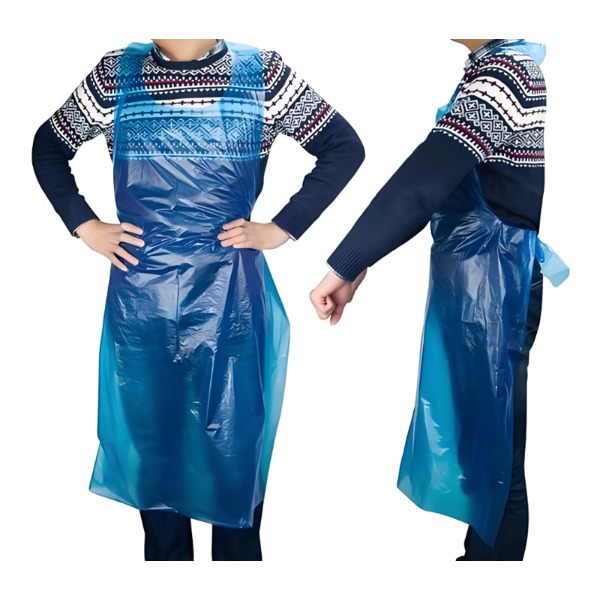
In the fast-paced environment of commercial food preparation, maintaining rigorous hygiene standards is not optional—it is the foundation of public health and business reputation. Among the various protective measures employed daily, polyethylene aprons have emerged as a frontline defense against contamination. These lightweight, cost-effective garments offer a practical solution for preventing cross-contamination, protecting both food and staff.
The Role of Protective Apparel in Food Safety
Food service operations involve handling raw ingredients, cooked dishes, cleaning agents, and waste—all within close quarters. Without proper barriers, pathogens such as Salmonella, Norovirus, and E. coli can transfer from clothing, hands, or surfaces to ready-to-eat foods. Traditional cloth aprons, while reusable, absorb moisture and can harbor bacteria after multiple uses. This is where polyethylene aprons provide a clear upgrade: they are impermeable, single-use (or limited-use), and designed to be discarded after exposure to high-risk tasks.
Hygiene regulations in most jurisdictions require food handlers to wear clean, appropriate protective clothing. Polyethylene aprons meet these requirements efficiently, especially for tasks involving raw meat, poultry, seafood, or high-splash activities like dishwashing and sauce preparation.
Material Properties That Matter
Polyethylene is a thermoplastic polymer known for its moisture resistance, flexibility, and low cost. When manufactured into aprons, it offers several characteristics critical for food service:
| Property | Benefit in Food Service |
|---|---|
| Waterproof | Prevents liquids from soaking through to uniforms or skin |
| Lightweight | Reduces heat stress and allows free movement |
| Non-absorbent | No wicking of juices, blood, or cleaning chemicals |
| Tear-resistant (specific gauges) | Holds up during vigorous tasks if properly selected |
| Economical | Enables frequent changes without significant cost |
These properties make polyethylene aprons suitable for short-duration, high-turnover tasks where reusable aprons would require constant laundering—an expense and logistical challenge.
Common Applications in Food Service
Polyethylene aprons are not one-size-fits-all; their use depends on the risk level of the activity. Below is a typical breakdown of where they excel:
| Task Area | Polyethylene Apron Usage |
|---|---|
| Raw meat processing | Full-front coverage, changed between species or batches |
| Vegetable washing and cutting | Protection from soil and plant debris |
| Dishwashing and pot scrubbing | Shields against greasy water and detergents |
| Sauce and soup preparation | Guards against hot splashes (not for high-heat oil) |
| Waste handling | Prevents contact with decaying matter |
| Cleaning and sanitizing surfaces | Blocks chemical splashes (not for strong solvents) |
In each case, the apron serves as a disposable barrier that can be removed and replaced without leaving the work area, maintaining workflow efficiency.
Comparing Polyethylene Aprons to Other Materials
To understand the specific value of polyethylene aprons, it helps to contrast them with other common apron materials used in food service.
| Material | Reusable | Moisture Barrier | Cost per Use | Best For |
|---|---|---|---|---|
| Cotton/polyester blend | Yes | No | Low (after many washes) | Front-of-house, dry tasks |
| Vinyl (PVC) | Sometimes | Yes | Medium | Heavy wet work, chemical handling |
| Polyethylene | No | Yes | Very low | High-turnover, wet or messy tasks |
| Rubber/neoprene | Yes | Yes | High | Extended direct water contact |
Polyethylene aprons are not designed for high-heat grilling or prolonged contact with sharp instruments—they will tear or melt. However, for the majority of back-of-house tasks involving moisture and biological materials, they offer the best balance of protection and economy.
Hygiene Benefits Over Reusable Aprons
One of the most overlooked risks in food service is the reusable apron itself. Studies in food safety literature indicate that cloth aprons can retain pathogens even after industrial laundering if not properly processed. Moreover, during a shift, a reusable apron becomes soiled gradually. Staff may unknowingly transfer contaminants from one station to another because the apron looks “clean enough.”
Polyethylene aprons eliminate this ambiguity. They are worn for a single task or shift segment and then discarded. This forces a clean barrier for each new activity—especially critical when moving from raw to cooked food zones. Many food safety auditors explicitly note the use of disposable polyethylene aprons as evidence of a strong hygiene culture.
Practical Considerations for Selection
Not all polyethylene aprons perform identically. Food service managers should consider the following parameters:
- Thickness (gauge): Measured in microns or mils. Thinner aprons (10–15 microns) are adequate for light, short tasks. Thicker aprons (20–30 microns) resist tearing during heavy handling.
- Length and coverage: Full-length aprons (from chest to below knees) offer better protection than waist aprons for seated or bench work.
- Neck and waist ties: Weak ties cause frustration. Look for welded or reinforced attachment points.
- Static resistance: Important in dry environments near flour dust or packaging materials.
- Food contact compliance: Ensure the apron material meets local regulations for incidental food contact.
Selecting the correct polyethylene apron reduces waste while maintaining safety. Over-specifying (using very thick aprons for dry tasks) is unnecessary; under-specifying invites tears and exposure.
Integration into a Hygiene Protocol
A polyethylene apron alone does not guarantee hygiene. It works as part of a system. An effective protocol includes:
Hand hygiene before and after donning the apron.
Proper donning to avoid contaminating the outer surface.
Task-specific use – do not wear the same apron across raw and ready-to-eat areas.
Correct doffing – peel off without touching the contaminated front, then discard immediately.
Hand washing again after removal.
Training staff on these steps is as important as providing the aprons. Some operations color-code polyethylene aprons by zone (e.g., blue for raw meat, white for bakery) to further reduce cross-contact.
Environmental Considerations
Disposable polyethylene aprons raise legitimate environmental concerns. Polyethylene is derived from fossil fuels and is not biodegradable under normal landfill conditions. However, the food service industry has made strides in mitigating this footprint:
- Some manufacturers offer aprons made from recycled polyethylene.
- Thinner gauge aprons use less material per unit.
- High-efficiency incineration with energy recovery is possible in some waste management systems.
- Mechanical recycling of used polyethylene aprons is emerging, though not yet widespread.
Food service operations can balance hygiene and environmental responsibility by using polyethylene aprons only where needed—saving reusable aprons for low-risk tasks—and by choosing recycled-content options where available.
Regulatory and Audit Implications
Food safety audits (such as those based on HACCP principles or local health codes) scrutinize employee apparel. Common violations include soiled aprons, aprons worn outside designated areas, and lack of changing procedures. Polyethylene aprons help operations score well on these points because they make compliance visible. An auditor seeing a fresh polyethylene apron at each raw processing station immediately recognizes a hygiene-conscious operation.
Conversely, an operation relying solely on cloth aprons must demonstrate a rigorous laundering schedule and adequate spares—often more difficult to prove during a surprise inspection.
Cost-Benefit Analysis for Operators
At first glance, disposable polyethylene aprons appear more expensive than reusable cloth over time. However, a full cost accounting includes:
- Laundry service or machine depreciation, water, electricity, detergent.
- Labor for folding and distributing clean aprons.
- Storage space for soiled aprons awaiting washing.
- Replacement of worn-out reusable aprons (which have a finite life).
- Potential costs of a hygiene-related foodborne illness outbreak (legal, reputational, operational).
When these factors are included, the total cost of ownership for reusable aprons often meets or exceeds that of polyethylene aprons, especially in high-volume or wet environments. The added safety margin further tilts the balance toward disposables.
Best Practices for Storage and Dispensing
To maximize the benefits of polyethylene aprons, proper storage is essential. Aprons should be kept in a clean, dry area away from dust, pests, and chemical fumes. Dispensers that allow single-apron removal without touching the next apron are ideal. Wall-mounted dispensers near entrances to raw processing areas remind staff to change aprons proactively.
Bulk boxes of polyethylene aprons should be stored off the floor on shelving, and opened boxes should be closed after use to prevent contamination. Expiration is rarely an issue with polyethylene, but prolonged exposure to heat or UV light can make the material brittle.
Training Staff on Proper Use
Even the best polyethylene apron fails if used incorrectly. Training topics should include:
- When to wear an apron (and when not to – e.g., near open flames).
- How to adjust ties without touching the front.
- Why aprons must never be wiped with a towel (damages the barrier).
- The rule: one apron, one task zone, then discard.
- Where to dispose of used aprons (lined bins, not open trash).
Hands-on demonstrations and periodic refreshers improve compliance. Some operations post visual guides near apron dispensing stations.
Limitations and Complementary Gear
No single garment protects against all risks. Polyethylene aprons do not protect against:
- Heavy impact or puncture (e.g., boning knives).
- High heat (hot oil, grills, ovens).
- Chemical solvents (certain degreasers may penetrate or degrade polyethylene).
For those hazards, additional or alternative protective gear is required: cut-resistant gloves, heat-resistant aprons (e.g., Kevlar or aluminized), or chemical-resistant gloves and aprons (neoprene or PVC). Polyethylene aprons excel precisely in the large middle ground: wet, biological, and particulate risks.
Future Trends in Hygienic Aprons
The food service industry continues to innovate. Future developments in polyethylene aprons may include:
- Embedded color-changing indicators for heat or chemical exposure.
- Anti-microbial additives (though effectiveness on polyethylene is debated).
- Increased post-consumer recycled content.
- Thinner yet stronger films through advanced polymer layering.
- Compostable polyethylene options (true biodegradability remains challenging).
For now, the standard polyethylene apron remains a workhorse of food service hygiene—simple, effective, and affordable.
Conclusion
Polyethylene aprons are not glamorous, but they are essential. In an industry where a single lapse in hygiene can sicken hundreds and destroy a brand, the humble disposable apron provides a reliable, low-friction barrier against cross-contamination. Its waterproof, non-absorbent, and economical nature makes it the logical choice for countless daily tasks in kitchens, processing lines, and dishwashing stations.
When integrated properly—selected for the right thickness, paired with hand hygiene, and discarded after each risk zone—polyethylene aprons significantly reduce microbial transfer risks. They complement reusable aprons where those are appropriate, but in high-risk wet or raw-food environments, disposables are superior.
Food service operators who prioritize hygiene recognize that skimping on aprons is false economy. Providing adequate polyethylene aprons and training staff in their correct use is a low-cost, high-impact investment in food safety. As regulations tighten and consumer awareness grows, the role of these simple garments will only become more central to daily operations.