English
 Français
 Deutsch
Content
- 1 How CPE Material Is Made and Why It Matters
- 2 Core Performance Characteristics
- 3 Application Scenarios Across Industries
- 4 Food Contact Safety and Compliance Expectations
- 5 Product Specifications and Factory Price Reference
- 6 About Zhangjiagang Yingda Plastic Products Factory
- 7 CPE, PE and TPE Gloves: Choosing the Right Option
- 8 Buying Checklist for Bulk Purchasers
- 9 Quality Control and Testing Practices
- 10 Practical Storage and Handling Advice
- 11 Conclusion
- 12 Frequently Asked Questions
When buyers search for disposable gloves that combine water resistance, a comfortable fit and a secure grip, they quickly run into the same material question: what are cpe gloves made from, and in which situations do they outperform cheaper alternatives? CPE stands for chlorinated polyethylene, a film material that is modified from standard polyethylene through a chlorination process. The result is a film that feels softer and more flexible than many basic polyethylene films while offering stronger resistance to water, oil and everyday wear.
This guide is written for people who make practical purchasing decisions, including food distributors, restaurant operators, processing plant managers, household product importers and procurement teams in light industry. It explains how the material behaves, where it fits best, what certifications and testing matter, how specifications are usually written, and what to check before placing a bulk order. The goal is to help you judge whether this glove type suits your workflow before you request samples or quotations.
Throughout the article you will find comparison tables, a process overview, a specification summary and a checklist you can use during supplier evaluation. Where specific numbers are given, they reflect typical production values used in the industry and can be adjusted to your own requirements.
How CPE Material Is Made and Why It Matters
Understanding the origin of the material helps explain why gloves made from it behave differently in the hand. Polyethylene is a simple hydrocarbon polymer that produces inexpensive, lightweight film. Chlorinated polyethylene is created when chlorine atoms are introduced into the polymer structure during controlled processing. These chlorine groups change the way the molecular chains pack together, which gives the film more pliability, better surface feel and improved resistance to certain liquids.
From Base Resin to Finished Film
Production usually begins with the selection of resin grades suited to food contact or medical-related use. The resin is then melted and extruded into a continuous film, cooled, and wound into rolls. Film thickness and uniformity are checked at this stage because small variations can affect how the finished glove stretches and seals at the cuff. Producers that serve food and healthcare buyers typically keep records of resin lot numbers so that any batch can be traced if a question arises later.
Structural Traits That Shape Glove Performance
Two characteristics are especially important for buyers. The first is flexibility: the film must bend with the fingers without tearing at the knuckles. The second is surface behavior: the gloves must stay easy to open, slide onto dry or lightly damp hands, and hold a grip on slippery objects. Embossing patterns on the surface are used to improve this grip, and their depth and spacing are adjusted depending on the intended task.
Core Performance Characteristics
Buyers often compare gloves on price alone, but the performance profile determines how many gloves a team uses per shift and how often staff need to change gloves. CPE gloves are typically evaluated against the following characteristics.
- Water and oil resistance: The film resists penetration by water-based and many oil-based substances during short and medium contact periods.
- Flexibility and fit: The material conforms to the hand, which reduces the stiff feeling that some low-cost films create.
- Surface grip: Embossed or textured surfaces help workers handle wet produce, packaging and tools.
- Tear resistance during routine use: Properly formed gloves withstand ordinary opening, wearing and removal without splitting at the cuff.
- Odor and taste neutrality: High-quality resin with clean processing produces gloves that do not transfer noticeable smells to food.
Practical reading of the data: In routine kitchen tasks, staff usually change gloves between handling raw and ready-to-eat items. A glove that resists tearing and keeps grip on wet surfaces can reduce interruptions during peak service periods, which is often more valuable than a small difference in unit price.
The diagram above shows the general sequence used in many facilities. Each stage creates a point where quality can be verified, which is why buyers should ask suppliers to describe their inspection steps rather than relying only on finished-product samples.
Application Scenarios Across Industries
CPE gloves are used wherever workers need reliable hand protection that is light enough for repetitive tasks and tough enough to handle moist or slippery materials. The following scenarios reflect the most common purchasing patterns reported by distributors and end users.
Food Service and Food Processing
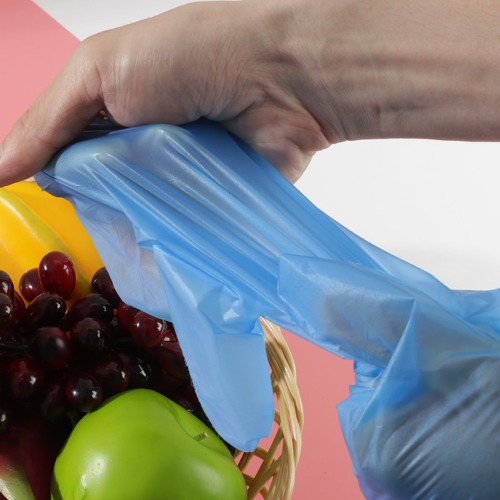
Restaurants, takeaway kitchens and food processing lines use gloves for handling raw meat, seafood, vegetables and prepared dishes. Fried chicken coating, fruit washing and portioning all involve moisture and frequent glove changes. The material's grip on wet surfaces and its comfortable fit over long shifts are key reasons food buyers choose this glove type. Food-contact suitability should always be confirmed with documentation, not assumed from appearance.
Daily Household Cleaning
Household buyers and cleaning service providers use gloves for dishwashing, bathroom cleaning and general housekeeping. Water resistance protects the hands from detergents and warm water, while a textured surface helps grip wet plates and cookware. Clear and off-white versions are popular with home users who want a lightweight glove that does not feel bulky.
Light Industrial Work
Packaging lines, assembly stations and maintenance tasks sometimes call for a disposable glove that protects against light oils, dust and minor abrasion. In these settings the glove is usually chosen for hygiene and cost control rather than heavy-duty protection. Buyers should match the glove to the actual hazard level in their workplace and consult their own safety assessment.
Auxiliary Medical and Personal Care Use
In some clinics, dental support rooms, beauty salons and nursing settings, CPE gloves serve as auxiliary protection for non-invasive tasks. These are not substitutes for clinical gloves in procedures that require sterile or medical-grade barriers, so the use case must be checked against local regulations and the buyer's internal protocols.
Food Contact Safety and Compliance Expectations
Any glove intended for food handling should be supported by documentation rather than general claims. Buyers should request evidence that the resin is suitable for food contact, that the manufacturing environment is controlled, and that finished products have been tested by an independent laboratory. A food grade CPE gloves program typically includes raw material statements, migration or safety test reports, and a quality management system that covers the full production chain.
Regulatory expectations differ between export markets. European buyers often look for conformity declarations, while North American and multinational food companies frequently request audit reports covering hygiene, working conditions and traceability. Asking for these documents early prevents delays in customs clearance and in supplier onboarding.
A useful rule for procurement teams is to match each certificate to the claim it supports. A quality system certificate proves process control, a conformity statement covers specific standards, and a laboratory report verifies the tested sample. None of these alone guarantees every batch, so buyers should combine them with sampling and periodic re-checks.
Product Specifications and Factory Price Reference
The following specification summary reflects the standard configuration offered for this product. Weight, packing and carton dimensions can be adjusted to match customer requirements, and custom options are available for buyers who need a specific custom CPE gloves format for their own brand or distribution channel.
| Item | Specification |
|---|---|
| Product Type | Disposable CPE gloves |
| Material | CPE |
| Weight per Piece | 1.8 g per piece (customizable from 1.5 g to 2.5 g) |
| Packing | 100 pcs per box, 50 boxes per carton |
| Carton Size | 67 x 38 x 31 cm (customizable) |
| Factory Price Including Tax | 3.6 CNY per box |
| FOB Shanghai Price | 0.49 USD per box |
| 40HQ Container Load | 850 cartons (42,500 boxes) |
When reviewing a quotation, confirm whether the price includes tax, what Incoterm applies, and how the carton count translates into container planning. Estimating your own order in cartons rather than individual gloves makes it easier to compare suppliers accurately.
- Glove weight influences both cost per box and the tactile feel for end users, so sample testing is recommended before finalizing.
- Carton dimensions affect warehouse layout and container loading efficiency.
- Custom packaging and printing may change lead time, so include them in the initial inquiry.
About Zhangjiagang Yingda Plastic Products Factory
Zhangjiagang Yingda Plastic Products Factory has focused on plastic films and disposable protective products for 18 years. The company combines research and development, production and sales, and its main business covers PVC food wrap, along with TPE gloves in textured, dotted and diamond-pattern finishes, LDPE gloves, HDPE gloves, CPE gloves and PE aprons. These products serve food preservation and packaging, fresh food preparation, household cleaning, personal care and laundry, catering and medical-related scenarios.
The factory operates its own research and testing capability and runs film blowing, cast film and glove forming lines within clean production workshops. Raw materials are new resin that meets food-grade and medical-grade standards, and production follows a documented quality management system. Packaging design and hand-shape customization are available for buyers who need tailored products.
Certifications and Test Documentation
- ISO 9001 quality management system certification, valid from 2024-04-28 to 2029-04-27
- CE declaration of conformity to EN 420 and EN 388, valid from 2022-03-18 to 2027-03-17
- RoHS testing for TPE gloves dated 2023-04-24
- BRCGS consumer product certification
- Sedex SMETA ethical trade audit, conducted 2024-07-22 to 2024-07-23
- Third-party test report for TPE and PE gloves issued 2025-05-27
- QS food-grade certification and Class I medical device filing
CPE, PE and TPE Gloves: Choosing the Right Option
Many buyers compare CPE gloves with polyethylene gloves and thermoplastic elastomer gloves before deciding. Each material offers a different balance of cost, grip, stretch and resistance. The table below summarizes typical differences to help frame the decision, although exact results depend on film thickness, embossing and resin grade.
| Attribute | CPE Gloves | PE Gloves | TPE Gloves |
|---|---|---|---|
| Flexibility | High | Moderate | High |
| Surface Grip | Good with embossing | Limited | Very good |
| Water and Oil Resistance | Strong | Basic | Strong |
| Typical Price Tier | Mid range | Lowest | Higher |
| Best Fit | Food handling and cleaning with grip needs | Simple, short tasks | Longer shifts and detailed handling |
In practice, PE gloves remain a sensible choice for very short, low-risk tasks where cost is the main concern. TPE gloves may suit operations that need the highest comfort and stretch. CPE gloves often occupy the middle ground, offering a practical combination of barrier performance, grip and affordability for many food and household applications.
Buying Checklist for Bulk Purchasers
A structured evaluation reduces the risk of unexpected problems after the first shipment. The checklist below can be used during supplier comparison or internal approval.
- Confirm the material and whether the resin is documented for food contact or medical-related use.
- Request a physical sample and test fit, grip, tear resistance and surface feel with your own staff.
- Ask for the glove weight tolerance and check how it aligns with your cost and performance targets.
- Review the minimum order quantity, production lead time and packing options.
- Verify certificates, test reports and their validity dates before signing a contract.
- Clarify the Incoterm, price basis including or excluding tax, and container planning.
- Agree on labeling, carton marking and any custom printing requirements in writing.
Buyers who run a small pilot order before committing to a full container often identify storage, labeling or handling issues early. This approach protects both the procurement budget and the operations team's schedule.
Quality Control and Testing Practices
Quality control for disposable gloves works best when it covers the entire process rather than only the final carton. Consistent results depend on monitoring at each stage and on clear rules for accepting or rejecting a batch.
Incoming Resin Inspection
Each resin lot should be checked against its specification sheet before production. Appearance, melt behavior and contamination checks help prevent defects that would otherwise appear only after forming. Lot numbers are recorded so that any issue can be traced back quickly.
In-Process Monitoring
During film extrusion and glove forming, operators check thickness, embossing depth, cuff sealing and dimensional consistency. Sampling intervals are set according to line speed and historical defect rates. Deviations trigger immediate adjustment rather than waiting for the end of the shift.
Finished Product Verification
Before packing, finished gloves are inspected for holes, uneven thickness and surface defects. Sampling plans commonly examine several boxes from each batch, and results are compared with the approved standard. Retained samples allow later investigation if a complaint is received.
Practical Storage and Handling Advice
Good storage protects the glove after it leaves the factory. Warehouses should keep cartons away from direct sunlight, heat sources and chemicals that could affect packaging. Stacking limits should be respected to prevent carton deformation, and first-in, first-out rotation helps avoid long storage periods. End users benefit from keeping gloves in a dry dispensing area close to the work station, which encourages staff to change gloves when required.
Staff training is equally important. Gloves should be put on with clean hands, checked for damage before use, and replaced when torn, contaminated or after switching tasks. These habits protect product quality and maintain the hygiene standards expected by food and healthcare buyers.
Conclusion
CPE gloves offer a practical balance of water resistance, flexibility, surface grip and cost for many food, household and light industrial applications. The best purchasing decisions come from matching the material to the real task, checking documentation rather than relying on appearance, and testing samples before committing to bulk volumes. Buyers who evaluate specifications, certificates and manufacturing practices together are generally better placed to secure consistent quality over time.
If your team is comparing options for a new product line or replacing an existing glove, a structured review of weight, packing, carton planning and documentation will shorten the selection process. Contact the sales team with your target specifications and volume estimate to receive current pricing details and sample arrangements.
Frequently Asked Questions
Q1: What are CPE gloves used for?
CPE gloves are commonly used in food service, food processing, household cleaning, light industrial tasks and some auxiliary medical or personal care settings. Their water resistance, flexibility and surface grip make them suitable for handling wet or slippery items during routine work.
Q2: Are CPE gloves food safe?
Food suitability depends on the resin, the production environment and the supporting documentation. Buyers should request food-contact statements, test reports and quality system certificates from the supplier rather than assuming safety based on appearance alone.
Q3: How do CPE gloves differ from PE gloves?
CPE gloves generally offer better flexibility, stronger water and oil resistance and better grip when embossed. PE gloves are typically lower in cost and suit short, low-risk tasks. The right choice depends on the balance of performance and budget for your application.
Q4: What is the MOQ and price range for CPE gloves?
The standard configuration is packed at 100 pieces per box and 50 boxes per carton. The reference factory price including tax is 3.6 CNY per box, and the FOB Shanghai price is 0.49 USD per box. Final pricing and minimum order quantities depend on customization, packaging and shipping terms, so buyers should confirm current figures with the sales team.
Q5: Can the glove weight and packaging be customized?
Yes. Glove weight can be adjusted within a range of 1.5 g to 2.5 g per piece compared with the standard 1.8 g. Carton dimensions and packaging design can also be customized, and hand-shape customization is available for buyers with specific fit requirements.
Q6: What certifications does the factory hold?
The factory holds ISO 9001 quality management certification, a CE declaration of conformity to EN 420 and EN 388, RoHS testing for TPE gloves, BRCGS consumer product certification, a Sedex SMETA ethical trade audit, a third-party test report for TPE and PE gloves, QS food-grade certification and a Class I medical device filing. Certificate copies can be requested for verification.