English
  Français
  Deutsch
 Content
- 1 The Material Foundation: Low-Density Polyethylene
- 2 Seamless Construction and Fit
- 3 Chemical Resistance Profile
- 4 Reducing Cross-Contamination Risk
- 5 Physical and Mechanical Integrity
- 6 Thermal and Electrostatic Properties
- 7 Limitations and Proper Use
- 8 FAQ: LDPE Disposable Gloves and Contaminant Protection
- 9 Conclusion: A Validated Choice for Barrier Protection
In environments where contamination control is critical—such as food processing, cleanrooms, healthcare support, or industrial maintenance—choosing the right hand barrier is not merely a compliance issue but a functional necessity. Among various options, LDPE disposable gloves have emerged as a highly effective solution for blocking a wide spectrum of contaminants. Understanding their protective mechanism requires a close look at their material properties, structural design, and performance characteristics in real-world conditions.
The Material Foundation: Low-Density Polyethylene
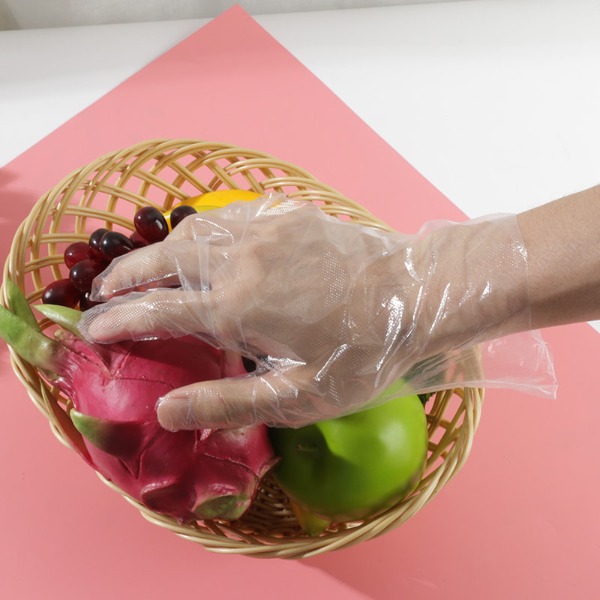
LDPE disposable gloves are manufactured from low-density polyethylene, a thermoplastic polymer known for its flexibility, transparency, and chemical resistance. Unlike natural rubber latex or vinyl, LDPE forms a non-porous, continuous film that inherently resists the passage of liquids, particulates, and many microorganisms. This intrinsic barrier property is the first line of defense against contaminants.
The polymer chain structure of LDPE creates a dense molecular network. While not as tightly crosslinked as some high-performance engineering plastics, it is sufficiently compact to block water molecules, dust particles, and even certain bacterial-sized entities. Importantly, LDPE contains no plasticizers—unlike PVC-based gloves—which eliminates the risk of plasticizer migration that could otherwise compromise barrier integrity or contaminate sensitive products.
| Protection Aspect | Mechanism in LDPE Disposable Gloves | Common Contaminants Blocked |
|---|---|---|
| Liquid barrier | Non-porous hydrophobic surface | Water-based solutions, blood, cleaning fluids |
| Particulate barrier | Smooth, static-resistant finish | Dust, fibers, powder residues |
| Microorganism shield | Continuous film without pores | Bacteria (limited viral protection) |
| Chemical splash defense | Inert polymer structure | Mild acids, alkalis, alcohols |
Seamless Construction and Fit
A glove is only as strong as its weakest point. LDPE disposable gloves are typically produced via heat-sealing or blown-film extrusion, resulting in seamless designs that eliminate needle holes or weak weld lines found in some sewn or dip-molded gloves. The absence of seams prevents wicking—the capillary movement of liquids through thread holes—which is a common failure mode in textile-lined or poorly constructed gloves.
The loose-fitting nature of most LDPE disposable gloves also contributes to contamination control. Unlike tight-fitting nitrile or latex gloves that may tear during donning due to friction, LDPE gloves slide on easily. This reduces the risk of stretching-induced micro-tears. However, for tasks requiring dexterity, some variants incorporate texturized fingertips to maintain grip without compromising the barrier.
Chemical Resistance Profile
While LDPE disposable gloves are not suitable for aggressive solvents or prolonged chemical immersion, they offer outstanding resistance to a range of common contaminants. Their hydrophobic surface repels aqueous solutions, including most biological fluids, detergents, and saline. They also resist aliphatic hydrocarbons, weak acids, and bases.
The table below summarizes typical compatibility. Note that breakthrough time (the time a chemical takes to permeate the glove material) varies with thickness, but standard LDPE disposable gloves (around 0.5–1.0 mil) generally provide reliable splash protection.
| Contaminant Category | Compatibility with LDPE | Recommended Use Scenario |
|---|---|---|
| Water-based biocides | Excellent | Cleaning surfaces, handling disinfectants |
| Vegetable oils | Good | Food preparation, kitchen tasks |
| Aliphatic solvents (e.g., hexane) | Moderate | Short-term splash only |
| Aromatic solvents (e.g., toluene) | Poor | Not recommended |
| Blood & bodily fluids | Excellent (as barrier) | Healthcare support, lab cleanup |
Reducing Cross-Contamination Risk
In industries like food service or electronics assembly, cross-contamination poses a major hazard. LDPE disposable gloves are designed for single-use, which inherently prevents the accumulation of contaminants that occurs with reusable gloves. Their low cost encourages frequent changes, reinforcing hygienic protocols.
Moreover, LDPE does not support microbial growth. The smooth, non-absorbent surface prevents bacteria from colonizing, unlike cloth or porous materials. After use, the gloves can be easily inverted during removal, trapping contaminants inside—a standard technique for infection control.
Physical and Mechanical Integrity
A common misconception is that LDPE disposable gloves are fragile. While they do not match the puncture resistance of heavy-duty nitrile, modern LDPE formulations incorporate linear low-density polyethylene (LLDPE) blends to increase tensile strength and tear resistance. The material stretches under stress rather than snapping abruptly, providing visible warning signs before failure.
For applications involving sharp objects or rough surfaces, double-gloving with LDPE disposable gloves is an effective strategy. The low coefficient of friction between LDPE layers allows independent movement, reducing the chance of simultaneous puncture. This method is often used in forensic cleaning or hazardous material spill response where maximum barrier assurance is needed.
Thermal and Electrostatic Properties
LDPE disposable gloves offer limited thermal protection but excel in static-sensitive environments. Their natural surface resistivity prevents static charge accumulation, reducing the risk of electrostatic discharge (ESD) that could damage sensitive electronic components or ignite flammable dust. Some variants are explicitly designated as static-dissipative, though even standard LDPE performs better than many latex alternatives.
In cold storage or freezer applications, LDPE remains flexible down to approximately -50°C, unlike PVC which stiffens. This makes LDPE disposable gloves suitable for handling frozen foods or working in low-temperature cleanrooms without cracking.
Limitations and Proper Use
No glove provides universal protection. LDPE disposable gloves degrade rapidly upon exposure to strong oxidizing agents (e.g., bleach concentrates) or aromatic hydrocarbons. They also offer minimal heat resistance—temperatures above 60°C cause softening, and direct flame is strictly forbidden.
Users must also be aware that while LDPE blocks bacteria via liquid barrier, it is not certified as a medical-grade barrier against bloodborne pathogens unless explicitly tested to ASTM standards. For high-risk biological contamination, verify the glove’s specific certification.
FAQ: LDPE Disposable Gloves and Contaminant Protection
Q1: Can LDPE disposable gloves protect against viruses?
A: They provide a physical barrier against virus-laden droplets, but are not rated for viral penetration resistance under medical standards. For viral protection, use ASTM-tested nitrile or latex gloves.
Q2: Are LDPE disposable gloves food safe?
A: Yes. Most LDPE disposable gloves comply with food contact regulations (e.g., FDA, EU 10/2011) and are widely used in food handling due to their chemical inertness and lack of odor transfer.
Q3: How do LDPE gloves compare to vinyl gloves against chemicals?
A: LDPE generally offers better resistance to water-based chemicals and alcohols than standard vinyl gloves, but vinyl may perform better with some oil-based substances. Neither is suitable for strong solvents.
Q4: Do LDPE disposable gloves cause allergies?
A: No. LDPE contains no latex proteins, thiurams, or carbamates—common allergens found in latex and some synthetic gloves. They are hypoallergenic for most users.
Q5: Can I reuse LDPE disposable gloves after washing?
A: Not recommended. Washing may introduce micro-tears or stretch the material, compromising the barrier. They are designed for single-use to prevent cross-contamination.
Q6: What thickness offers the best protection?
A: Thicker LDPE gloves (1.0–1.5 mil) provide greater puncture resistance and chemical breakthrough time, but reduce tactile sensitivity. Choose thickness based on task hazard assessment.
Conclusion: A Validated Choice for Barrier Protection
LDPE disposable gloves deliver superior protection against a defined range of contaminants—specifically liquids, particulates, and mild chemicals—through a combination of inherent polymer barrier properties, seamless construction, and controlled surface characteristics. Their advantages in food safety, cleanroom protocols, and low-risk healthcare support are well-documented through material science and practical use. While no glove is perfect for every application, understanding the specific mechanisms by which LDPE disposable gloves exclude contaminants enables informed selection. For tasks where water-based splash protection, particulate containment, and allergen-free handling are paramount, they remain a pragmatic, high-performance solution.