English
  Français
  Deutsch
 Content
- 1 Defining Sustainability in Disposable Gloves
- 2 The Material Science Behind Sustainable Glove Performance
- 3 Seven Criteria for Evaluating Sustainable Disposable Gloves
- 4 Head-to-Head Material Comparison
- 5 Matching Gloves to Industry Applications
- 6 Certifications: The Verification Layer
- 7 Practical Strategies for Reducing Glove Waste
- 8 Frequently Asked Questions
- 8.0.1 Q1: Are polyethylene disposable gloves recyclable?
- 8.0.2 Q2: What is the most sustainable material for disposable gloves?
- 8.0.3 Q3: Do sustainable disposable gloves cost more?
- 8.0.4 Q4: Are TPE gloves better for the environment than polyethylene gloves?
- 8.0.5 Q5: How should disposable gloves be disposed of?
The disposable glove market is under increasing pressure to reconcile hygiene with environmental responsibility. Buyers across food processing, healthcare, and commercial cleaning now search for the best sustainable disposable gloves, but the term sustainability means different things to different suppliers. A glove that carries a green label may still fail on durability, while a high-performance glove might be manufactured without any certified environmental or ethical standards.
This guide provides a decision-making framework for procurement professionals and quality managers who need both: protection that performs, and products that align with their organization's sustainability commitments. We examine the polymer materials used in modern disposable gloves, the certifications that verify responsible manufacturing, the comparative strengths of each glove family, and the practical strategies that reduce waste without compromising safety.
The goal is to help you identify gloves that genuinely deliver lower environmental impact across their lifecycle, rather than relying on superficial packaging claims.
Defining Sustainability in Disposable Gloves
Sustainability in single-use products cannot be reduced to a single attribute such as biodegradability or recycled content. A realistic assessment looks at the full lifecycle of the glove and balances resource consumption, functional performance, and disposal pathways. For disposable gloves, the following dimensions matter most.
- Material efficiency: Lighter gloves that use less polymer per pair reduce raw material demand and cut logistics-related emissions.
- Functional durability: A glove that resists tearing and punctures prevents premature replacement and lowers total waste volume.
- Manufacturing quality: Certified production processes reduce defective output, energy waste, and quality-related returns.
- Regulatory compliance: Food-contact approvals and medical-grade registrations confirm that the glove can perform its intended role safely, which prevents misuse and unnecessary disposal.
- Supply chain ethics: Environmental and labor audits add a further layer of accountability across the production chain.
- End-of-life considerations: Recyclable or energy-recoverable materials, together with minimal packaging, improve the environmental outcome after the glove completes its service life.
This lifecycle perspective shifts the conversation away from simple material labels and toward measurable outcomes. A lightweight high-density polyethylene glove with high tensile strength can be more sustainable than a thicker glove made from a softer resin, because it achieves the same protection with less polymer. Similarly, a more durable thermoplastic elastomer glove that lasts through long procedures can produce less waste overall than a softer glove that tears frequently.
Key takeaway: Procurement teams should evaluate each product on its actual environmental performance within a specific use case, rather than relying on broad claims such as natural or chemical-free.
The Material Science Behind Sustainable Glove Performance
The polymer family used to produce a glove determines its weight, flexibility, strength, and recyclability. Four materials dominate the sustainable disposable glove landscape: CPE, HDPE, LDPE, and TPE. Each material has a distinct environmental and functional profile that shapes its suitability for different industries.
CPE Gloves: Exceptional Lightness
CPE gloves are formed from a modified polyethylene film that delivers a soft, elastic feel and excellent transparency. Their low density makes them one of the lightest glove categories available, which reduces both material consumption per pair and shipping weight. In food service and light cleaning applications, CPE gloves provide reliable barrier protection while using minimal polymer. The combination of lightness, flexibility, and clarity makes them a strong candidate for operations that prioritize material efficiency and visual hygiene monitoring.
HDPE Gloves: The Strength-to-Weight Champion
High-density polyethylene is known for its outstanding tensile strength in very thin films. Manufacturers can produce HDPE gloves that are tough enough for handling oily foods, cleaning chemicals, and rough surfaces while using significantly less polymer than alternative materials. This strength-to-weight ratio positions HDPE gloves as one of the most material-efficient choices in the disposable glove market. Their firmer feel is an advantage in tasks that require a secure grip and consistent pressure, such as portioning meat, trimming produce, or wiping down industrial equipment.
LDPE Gloves: Comfort and Versatility
Low-density polyethylene is softer and more flexible than HDPE, which makes LDPE gloves comfortable for extended wear. They offer reliable protection against water, oil, and common contaminants while allowing natural hand movement. LDPE gloves are frequently specified in food service, custodial work, and healthcare support because they combine protection, comfort, and economy in a single package. The soft film also reduces hand fatigue during repetitive tasks, which supports worker compliance and productivity.
TPE Gloves: Durability Meets Dexterity
Thermoplastic elastomer gloves blend the elasticity of rubber with the processability of plastic. They deliver excellent fit, tactile sensitivity, and long-lasting durability, which translates into fewer glove changes during lengthy procedures. TPE gloves are increasingly adopted in medical, industrial, and premium food-handling applications where comfort and dexterity are critical. Although each pair of TPE gloves contains more material than a thin polyethylene alternative, their longer service life and stronger puncture resistance can yield a lower total environmental footprint in high-intensity tasks.
 Soft Off-White TPE Disposable Gloves with Diamond Grip PatternThese TPE gloves combine rubber-like elasticity with a non-slip diamond texture, making them a comfortable, latex-free choice for food handling, cleaning, and other tasks where grip and hygiene matter.View Product →
Seven Criteria for Evaluating Sustainable Disposable Gloves
Selecting the best sustainable disposable gloves requires a disciplined evaluation process. Focus on the following seven criteria rather than marketing claims. Together, they provide a comprehensive view of how a glove will perform in the field and how much environmental impact it will create over its service life.
- Barrier performance: Assess the glove's resistance to water, oil, chemicals, and microbial contaminants.
- Gauge and material weight: Lower-gauge gloves consume less polymer, but only if they still meet the tensile strength required for the task.
- Comfort and ergonomics: Gloves that fit well and allow natural hand movement are less likely to be discarded early or replaced unnecessarily.
- Allergen safety: Latex-free formulations prevent type I allergic reactions and reduce occupational health risks.
- Certification status: Confirm that the glove carries food-contact approvals, medical device registration, or other standards relevant to your sector.
- Packaging and logistics: Minimal, recyclable packaging and efficient carton dimensions lower the overall carbon footprint per glove.
- Supplier responsibility: Verify that the manufacturer follows documented quality systems and ethical labor practices.
Using a simple scoring framework can help your team weigh trade-offs explicitly. For example, a glove with outstanding comfort may score lower on material efficiency, while a glove with strong chemical resistance may feel heavier during long shifts. The visual below summarizes the recommended five-stage selection workflow.
Head-to-Head Material Comparison
The table below compares the four main glove material families across sustainability-relevant dimensions. Use it as a shortlisting starting point, then verify performance claims with supplier data and in-field trials.
| Material | Protection Level | Comfort | Material Efficiency | Best Applications |
|---|---|---|---|---|
| CPE | Good | Soft and elastic | Very high | Food handling, light cleaning, beauty services |
| HDPE | Excellent | Firm | High | Food preparation, industrial tasks, janitorial work |
| LDPE | Good | Flexible and soft | Moderate | Food service, healthcare support, general hygiene |
| TPE | Excellent | Elastic and snug | Moderate | Medical care, chemical handling, precision work |
The right choice depends on the specific task. A glove that is ideal for food portioning may be less appropriate for handling aggressive cleaning chemicals. Always validate the selected material against the protective requirements of each application before committing to a purchase.
Matching Gloves to Industry Applications
Understanding where gloves are used helps buyers select the right material the first time, reducing waste and improving safety. The four application families below cover most commercial and institutional uses.
Food Processing and Food Service
Food processing facilities operate under strict hygiene regulations and use gloves to protect both products and workers. CPE and LDPE gloves provide excellent food-contact characteristics and are lightweight enough for all-day wear. HDPE gloves add extra strength for heavy preparation tasks such as cutting, mixing, and portioning. Off-white gloves are often preferred because they present a clean, professional appearance and help quality teams spot contamination quickly.
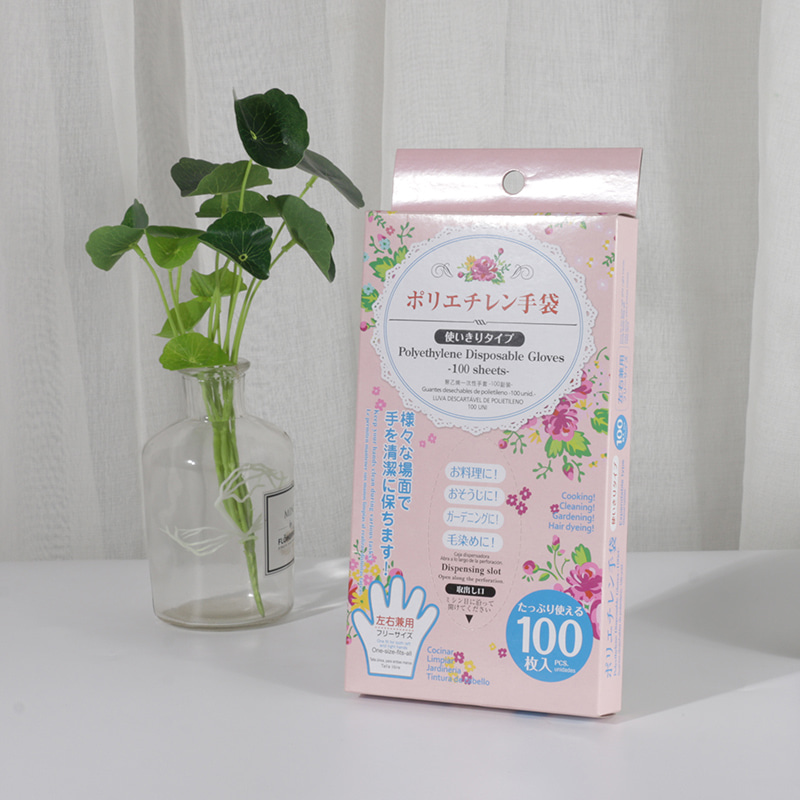
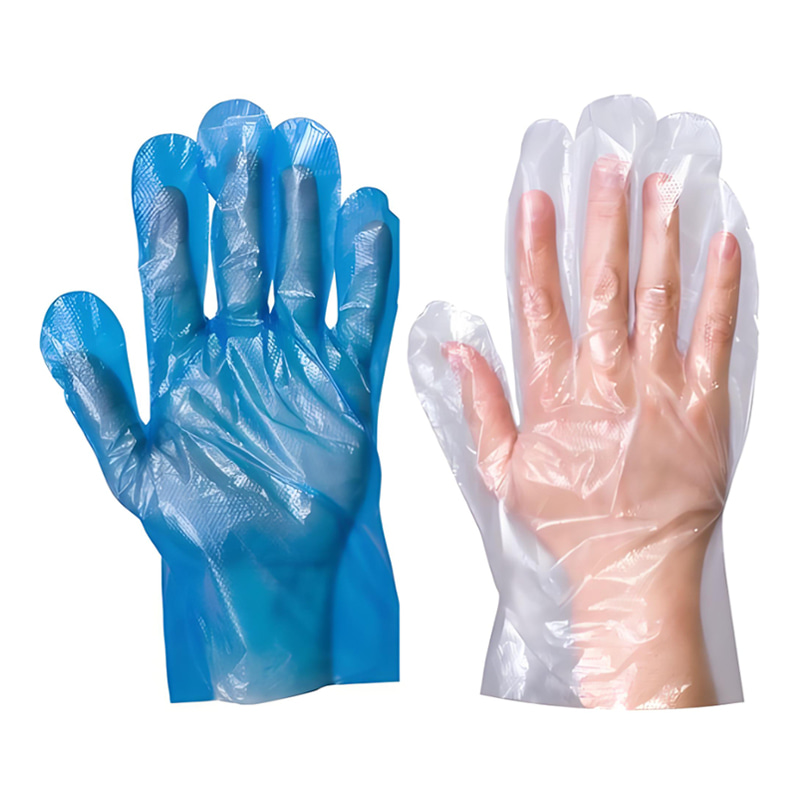 Waterproof and Oil-Proof Off-White HDPE Disposable GlovesMade from durable HDPE, these off-white gloves resist water, oil, and bacteria while offering a textured grip. They suit food processing, kitchen work, and industrial protection where strength and cleanliness are essential.View Product →
Healthcare Facilities
Healthcare environments require gloves that prevent cross-contamination without triggering allergies or skin irritation. Blue-colored HDPE and LDPE gloves with antibacterial and acid-alkali resistance are routinely used for non-surgical tasks, including patient transport, equipment handling, and surface disinfection. TPE gloves are selected when high dexterity is needed for examination and inspection procedures. Because these gloves are latex-free, they eliminate the risk of type I latex allergies among both patients and staff.
 Antibacterial Acid- and Alkali-Resistant Blue LDPE Disposable GlovesThese blue LDPE gloves provide reliable protection against bacteria, acids, and alkalis, making them suitable for medical, laboratory, and industrial tasks. Their lightweight design ensures comfort during extended use.View Product →
Industrial and Chemical Environments
Workers in industrial settings encounter oils, lubricants, cleaning agents, and other chemicals that can degrade standard polyethylene gloves. Chemical-resistant blue TPE gloves and HDPE gloves with acid-alkali resistance offer better protection in these conditions. Black TPE gloves with good temperature resistance support handling of moderately hot materials and reduce heat-related hand fatigue.
Janitorial and Commercial Cleaning
Janitorial teams change gloves multiple times per shift, so cost-effectiveness and easy donning are essential. LDPE and CPE gloves provide sufficient protection against water, mild detergents, and surface contaminants while staying comfortable for repeated use. Bulk packaging and dispenser-friendly carton designs help cleaning crews access gloves quickly and minimize packaging waste.
Certifications: The Verification Layer
Certification is the evidence that separates responsible manufacturing from unverified claims. When evaluating the best sustainable disposable gloves, buyers should examine the certifications held by the manufacturer rather than relying on product labels alone. The most relevant credentials include the following.
- ISO 9001: A documented quality management system covering production processes and continuous improvement.
- Food-grade certification (QS): Confirms that the materials and finished products are approved for food contact.
- Class I medical device registration: Verifies compliance for healthcare applications at the basic protective level.
- CE marking: Demonstrates conformity with applicable European safety requirements.
- BRC certification: Covers food safety and packaging quality standards for suppliers to the retail and food service supply chain.
- Sedex ethical trade audit: Verifies responsible labor practices and supply chain transparency.
These certifications do not directly prove that a glove is carbon-neutral or biodegradable. However, they demonstrate that the glove is produced under controlled conditions with documented processes, proper quality control, and responsible labor practices. A manufacturer that maintains an ISO 9001 system and successfully passes a BRC audit is far more likely to manage raw materials and production waste effectively than one without such oversight.
Buyers should request current certificates, examine the audit scope, and confirm that the certified products match the items being purchased. This verification step protects the buyer from claims that do not reflect the actual product. Regulatory pressure on plastic products is also increasing, so staying informed about how environmental regulations affect the polyethylene glove industry will help procurement teams anticipate future compliance requirements.
Practical Strategies for Reducing Glove Waste
Even the most sustainable glove will generate unnecessary waste if it is overused, mismanaged, or replaced too frequently. The following strategies help procurement leaders and facility managers reduce glove consumption while maintaining safety.
- Match the glove type to the task: Avoid using heavy-duty gloves for light tasks, and do not downgrade protection where it is genuinely required.
- Right-size inventory: Analyze usage patterns to order appropriate volumes and avoid expiry-related disposal.
- Train staff on proper donning and doffing: Correct technique prevents contamination, early replacement, and accidental waste.
- Store gloves correctly: Keep cartons in a cool, dry environment away from direct sunlight to prevent material degradation and premature failure.
- Choose efficient packaging: Select bulk cartons and recyclable packaging materials whenever the supplier offers them.
- Combine with reusable PPE: Pair gloves with reusable aprons and other protective equipment to reduce overall single-use consumption.
Consider a food service operation that consumes 10,000 pairs of gloves per day. If a lighter yet equally strong alternative reduces material weight by just 0.3 grams per glove, the site avoids roughly one metric ton of polymer consumption every year. When multiplied across multiple locations, the cumulative reduction in raw material demand, packaging waste, and transport emissions becomes a meaningful part of the company's environmental key performance indicators.
Waste reduction is a continuous improvement exercise. Track glove usage by department, identify unexpected consumption spikes, and investigate the root cause. Often, the problem is not the glove itself but a mismatch between glove features and the actual task. For a deeper look at material differences, review how polyethylene gloves compare to other disposable glove materials when selecting your next supply contract.
Frequently Asked Questions
Q1: Are polyethylene disposable gloves recyclable?
Polyethylene is a recyclable polymer, but most disposal systems treat used gloves as contaminated waste. If gloves have been in contact with food, chemicals, or biological material, recycling is rarely feasible. Clean, unused gloves can sometimes be repurposed or collected through specialized programs, but the most effective sustainability strategy is to reduce the number of gloves consumed in the first place.
Q2: What is the most sustainable material for disposable gloves?
There is no single answer. The most sustainable material is the one that provides adequate protection for the task while using the least material and generating the least waste. In many food-handling tasks, lightweight CPE or HDPE gloves achieve this balance. In higher-risk environments, a more durable TPE glove may create less waste overall because it lasts longer and resists punctures.
Q3: Do sustainable disposable gloves cost more?
Not necessarily. Material-efficient polyethylene gloves can be cost-competitive while providing excellent performance. The real cost driver is total ownership: a glove that tears easily or causes hand fatigue can increase expenses through higher replacement rates and reduced productivity. Evaluate cost per task, not cost per box.
Q4: Are TPE gloves better for the environment than polyethylene gloves?
TPE gloves are more durable and offer superior comfort, which can reduce the number of gloves used per shift. Polyethylene gloves, however, use less material per pair and are lighter to transport. The better choice depends on the application, the duration of use, and the sustainability priorities of the buying organization.
Q5: How should disposable gloves be disposed of?
Follow local regulations and the glove manufacturer's instructions. In healthcare settings, contaminated gloves must be treated as biohazard or infectious waste. In food service, gloves should be removed and disposed of in general waste bins unless local programs specify otherwise. Never wash and reuse single-use disposable gloves, because this compromises their barrier integrity.