English
  Français
  Deutsch
 Content
- 1 What Are TPE Gloves and PE Gloves?
- 2 Core Physical Differences at a Glance
- 3 Fit, Comfort, and Tactile Performance
- 4 Chemical, Water, and Temperature Resistance
- 5 Application Scenarios and Task Matching
- 6 Cost Efficiency and Procurement Perspective
- 7 A Practical Decision Framework for Buyers
- 8 Frequently Asked Questions
Disposable gloves are often compared by the price per box, but the real cost of a glove is measured over the full length of a task. TPE and PE gloves are two of the most common thermoplastic glove families used in food service, cleaning, logistics, and light industrial work. Both are latex-free, inexpensive relative to nitrile, and designed for short-duration protection. The difference is in how they behave under stretching, how they tolerate oil and chemicals, and how they feel after being worn for more than a few minutes. This guide explains those differences in practical terms so procurement teams, safety officers, and business owners can match the glove to the job instead of choosing by habit.
What Are TPE Gloves and PE Gloves?
TPE stands for thermoplastic elastomer. In glove manufacturing, TPE is a material class that combines rubber-like elasticity with the processing convenience of thermoplastics. The polymer structure contains flexible segments that stretch and then return to their original position, which is why a TPE glove snaps back when you pull the fingertip. This elastic behavior makes TPE gloves feel closer to latex or nitrile, without containing natural rubber proteins. Depending on the production method, TPE gloves can carry a diamond-embossed pattern, a dotted texture, or a matte finish, and those surface structures play a direct role in grip and liquid control.
PE stands for polyethylene, a simple polyolefin and the most widely used plastic in the world. Disposable PE gloves are usually made from low-density polyethylene or high-density polyethylene film. The film is lightweight, inexpensive, and easy to cut, weld, and package, which is why PE gloves dominate the low-cost segment of the market. The trade-off is that PE has almost no elastic memory. Once the film is stretched, it stays stretched. A PE glove therefore forms a loose bag around the hand rather than a close-fitting layer.
The material choice drives everything from cuff behavior to certification. Food-grade PE and TPE gloves are both available, but the two polymers perform very differently when they meet oil, heat, or repeated friction. For a deeper look at how TPE material behaves under repeated stretching, see how disposable TPE gloves compare with other glove materials.
Core Physical Differences at a Glance
When the marketing label is removed, five properties separate TPE from PE gloves: elastic recovery, hand fit, surface texture, resistance to oil and chemicals, and temperature tolerance. The table below summarizes the typical behavior of both materials under daily working conditions.
| Comparison Item | TPE Gloves | PE Gloves |
|---|---|---|
| Elastic recovery | High; returns to original shape | Low; film stays stretched |
| Hand fit | Follows fingers and palm | Loose and baggy at fingertips |
| Surface finish | Embossed, dotted, or matte | Smooth or lightly embossed |
| Oil and chemical resistance | Better; blue grades for chemicals | Water resistance only, limited oil tolerance |
| Temperature tolerance | Better in dark-colored grades | Softens near hot surfaces |
The reason lies in the molecular structure. TPE blends contain hard and soft segments; the soft parts stretch, while the hard parts preserve the shape, giving the film a rubbery memory. PE consists of long polymer chains that slide past each other under tension. When the tension is released, the chains keep their new position, so the glove does not spring back. This single property explains why PE gloves feel stiff in the fingers and why TPE gloves require a more controlled production process and a slightly higher raw material cost.
Fit, Comfort, and Tactile Performance
The most obvious difference between the two materials appears within seconds of putting the gloves on. PE gloves slip on easily because there is no elastic tension. That convenience is also the source of their main weakness: the cuff flares open, the fingertip can be noticeably longer than the wearer's finger, and the excess film bunches up inside the fist. When a worker needs to grip a tool, pick up a small part, or handle wet utensils, the loose material reduces tactile feedback and forces the hand to work harder. In a kitchen where gloves are changed dozens of times each shift, that small loss of precision adds up to slower work and more hand fatigue.
TPE gloves grip the hand lightly but firmly. The elastic recovery keeps the film against the fingers, so the wearer feels the surface they are actually touching. This matters in food plating, quality inspection, laboratory bench work, and any job requiring fine motor control. The same elasticity also reduces the risk of the glove sliding off during handling, which is a common complaint with PE gloves in wet conditions.
Surface texture creates a second difference. TPE gloves can be produced with diamond embossing to help liquids run off the fingertips, dot patterns to improve grip on wet glass and ceramic, or matte finishes for a dry and non-glare touch. PE gloves are mostly smooth or lightly embossed, which works well for dry objects but becomes slippery when wet or oily. In a simple field test, workers who handle freshly washed stainless steel trays report fewer drops and fumbles when wearing dotted TPE gloves compared with smooth PE gloves.
For staff with sensitive or dry skin, an off-white TPE glove with a diamond pattern offers a soft, powder-free feel and covers most routine work without the crinkle stiffness of PE film.
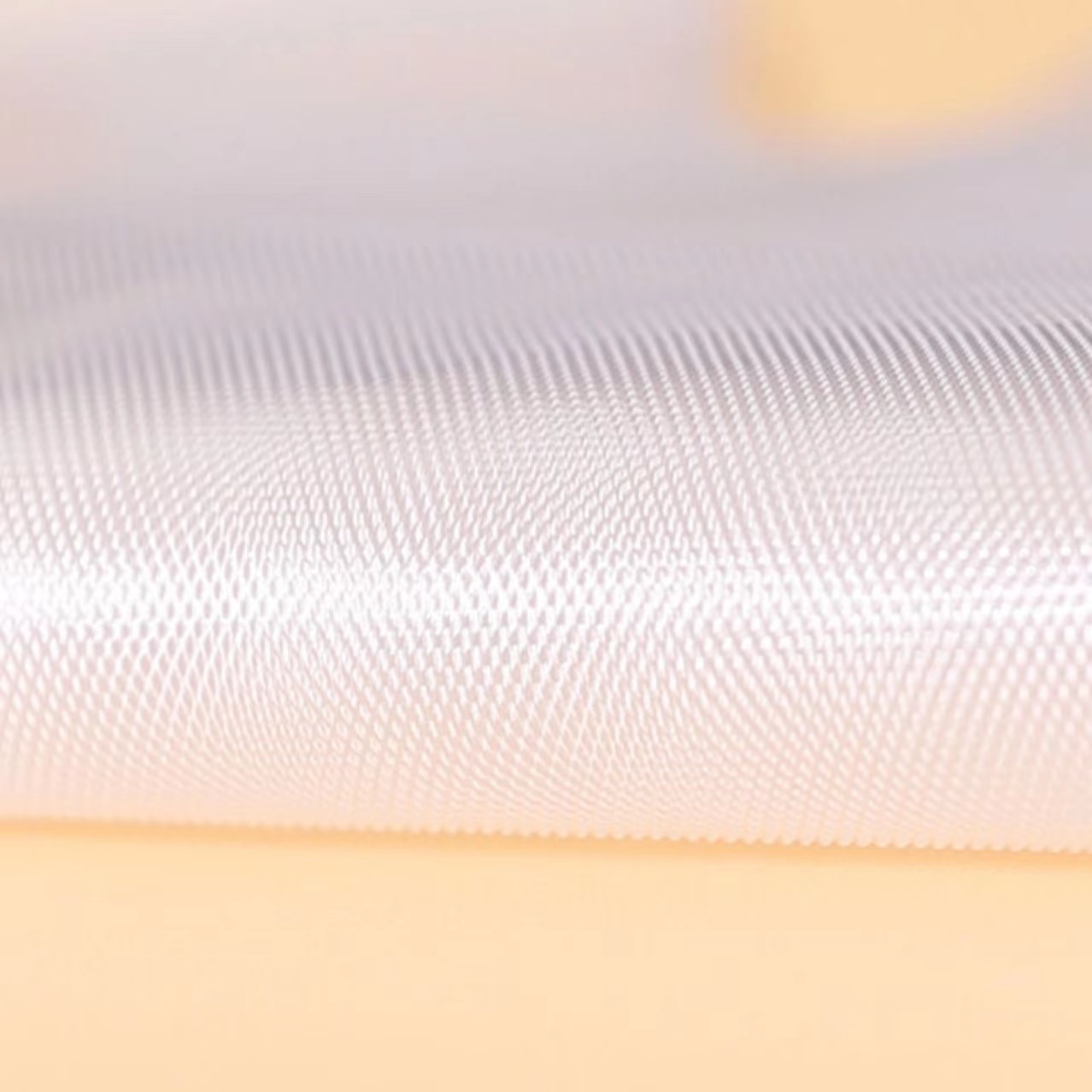 Soft Off-White TPE Gloves with Diamond Pattern for Sensitive SkinThese powder-free, latex-free gloves offer a gentle, flexible fit with a diamond-textured palm for reliable grip, making them a comfortable choice for routine tasks and users with dry or sensitive skin.View Product →
Chemical, Water, and Temperature Resistance
Both TPE and PE are hydrophobic, so water beads on the surface and runs off instead of soaking into the film. The real difference appears when the glove meets substances that can penetrate or weaken plastic.
Oils and greases are the main weakness of PE gloves. Cooking oil, margarine, machine oil, and even hand lotion can gradually soften the film or migrate through it, making the glove slippery and more likely to tear. In food preparation, where hands repeatedly contact meat fat, mayonnaise, or fried food, a PE glove can lose its grip within the first ten minutes of continuous use. TPE resists oil penetration much better because the elastomer segments form a denser barrier and the surface keeps its tackiness even after contact with fat.
Chemical resistance follows the same pattern. Blue TPE grades are formulated and labeled for resistance to diluted acids, alkalis, and disinfectants, which makes them the recommended option for staff who clean with bleach-based solutions or sanitizing sprays. PE gloves tolerate short contact with mild soap and water-based detergents, but they are not designed for sustained chemical exposure. Buyers should always verify the supplier rating for the specific liquid in use, because no single glove resists every substance.
Temperature is the third differentiator. PE film softens at a relatively low temperature, so contact with hot plates, steam, or freshly cooked food can cause the glove to stick, distort, or tear. TPE material, particularly in black grades, is positioned for good temperature resistance and handles warm surfaces without losing its shape. Warehouse staff who unload heated containers or kitchen crews who handle dishwasher racks benefit more from a temperature-rated TPE glove than from a standard PE glove.
Before ordering a large volume, run a simple 15-minute patch test using the actual liquid workers will touch. Apply the liquid to the gloved fingertip, watch for discoloration, swelling, or softening, and then decide whether PE is sufficient or TPE is required.
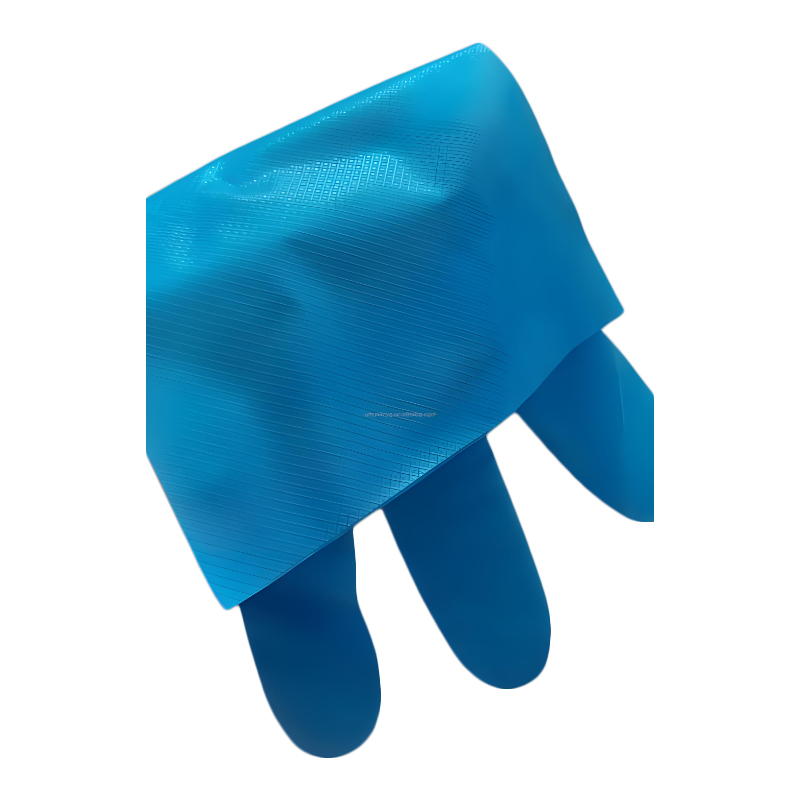 Chemical-Resistant Blue TPE Gloves with Diamond TextureFeaturing acid, alkali, and oil resistance, these blue TPE gloves provide a non-slip diamond grip and are suited for tasks involving mild corrosive liquids, such as cleaning or lab work.View Product →
Application Scenarios and Task Matching
The material decision becomes easier when you work backward from the task. The table below shows common work scenarios and the glove material that usually makes sense for each one.
| Working Scenario | Recommended Glove | Reason |
|---|---|---|
| Dry food portioning and packaging | PE | Low cost and sufficient for short, dry tasks |
| Handling oily meat, fried food, marinades | TPE | Better oil resistance and stable grip |
| Bathroom and kitchen deep cleaning | TPE | Blue grades tolerate disinfectants |
| Quick wiping and dusting | PE | Economical for very short tasks |
| Handling warm trays and heated containers | TPE | Higher temperature tolerance |
| Quality inspection and light assembly | TPE | Elastic fit and tactile feedback improve precision |
Three practical rules help with day-to-day sorting. First, if the glove only contacts water, PE is often the right call. Second, if the glove contacts oil, chemicals, or heat, choose TPE. Third, if the glove will be worn for longer than 15 minutes, the comfort advantage of TPE becomes part of the cost calculation, because a loose PE film causes hand fatigue and encourages workers to remove their gloves early.
In food service, keeping both materials in stock is common: PE gloves for quick wrapping and portioning, and TPE gloves for protein preparation, seasoning, or dishwasher unloading. In medical support environments, both products serve as non-sterile protective options, but TPE is preferred when tactile response matters, such as when manipulating small instruments during routine care.
For long, water-based cleaning cycles where cost sensitivity is high, a waterproof and oil-proof PE glove remains one of the most efficient choices on the market.
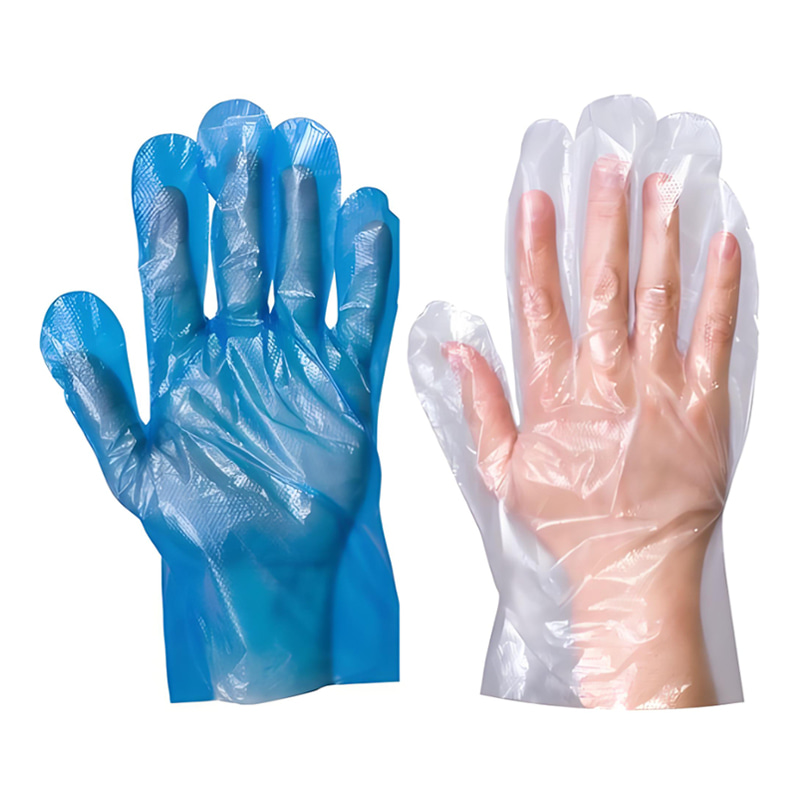 Waterproof and Oil-Proof Off-White HDPE GlovesThese economical HDPE gloves are waterproof, oil-proof, and bacteria-resistant, offering a practical barrier for extended water-based cleaning, food handling, or industrial applications where cost matters.View Product →
Cost Efficiency and Procurement Perspective
From a unit-price view, PE gloves always win. The resin is cheaper, the production lines run faster, and the product has been a commodity for decades. TPE gloves use a more expensive raw material and a more controlled film process, so the per-piece price is higher. But buyers should look at three numbers, not only the price per case.
The first number is the consumption rate. If a thin PE glove tears when the wearer grips a metal shelf or a piece of cutlery, the worker must stop, remove the glove completely, wash hands, and put on a new pair. That cycle costs more in labor than the price difference between a PE glove and a TPE glove. In handling tests with rough or sharp items, TPE gloves typically show a lower tear rate than PE gloves of similar thickness.
The second number is glove changes per shift. In a kitchen that produces hundreds of meals per day, a worker who changes gloves thirty times instead of fifteen doubles the consumption of gloves, soap, towels, and time. A more durable TPE glove that survives an entire station may lower the total daily PPE cost even when its unit price is higher.
The third number is the cost of a failed protection layer. A contaminated food batch, a chemical splash, or a case of contact dermatitis creates expenses that dwarf the savings from a cheaper glove. In many food processing facilities, the most balanced approach is to assign roughly two-thirds of glove usage to PE for dry and short tasks, and one-third to TPE for demanding stations.
A Practical Decision Framework for Buyers
The chart below condenses the material difference into a simple decision tree. Start with the working condition, follow the branch that matches the task, and let the material choice follow naturally.
Once the material is identified, run through this checklist before finalizing the order:
- Confirm the longest continuous wearing period per worker per shift.
- List every liquid the glove will contact, including water, oil, detergent, diluted acid, and sanitizer.
- Check whether the glove will touch warm objects such as heated trays or dishwasher racks.
- Test the glove on the actual task with the real liquids for 15 minutes before placing a volume order.
- Verify that the supplier can provide food-grade certification or a medical device filing that matches your industry.
- Confirm packaging and color customization options if the gloves are being branded for resale.
The TPE versus PE decision does not need to be made once for the whole company. Assign TPE to high-risk stations and PE to routine stations, and the budget stays predictable without compromising protection.
Frequently Asked Questions
Q1: Are TPE gloves stronger than PE gloves?
In normal working conditions, yes. TPE gloves have better tear resistance and elastic recovery, so they survive repeated finger movement, gripping, and friction better than PE film. PE gloves are more likely to tear when they catch on sharp or rough surfaces such as cutlery, metal racks, or packaging edges.
Q2: Can PE gloves be used for food handling?
Yes. PE gloves are widely used in food service for dry and short tasks such as sandwich assembly, bakery counters, and ingredient portioning, provided the product is made from food-grade material. For oily or greasy food, TPE gloves are more reliable because they resist oil absorption and keep a stable grip.
Q3: Are TPE gloves latex-free?
Yes. TPE is made from thermoplastic elastomers and does not contain natural rubber latex proteins. TPE gloves are a practical alternative for workers with latex sensitivity, as long as the supplier confirms that the production line is latex-free.
Q4: What is the main difference between TPE and PE gloves?
The main practical difference is elasticity. TPE gloves stretch and return to their original shape, giving a snug fit and better grip. PE gloves have almost no elastic memory, so they become loose and baggy during use. That single difference affects comfort, chemical resistance, and the range of tasks each glove can handle.
Q5: How should I choose between PE and TPE gloves for my business?
Evaluate the working conditions at each station. Use PE gloves for short, dry, low-risk tasks to control cost, and use TPE gloves for tasks involving oil, chemical solutions, heat, or extended wear. Run a small field test with the exact liquids and surfaces your staff handles, and base the order on the observed results.